











Communication Skills for Supervisors
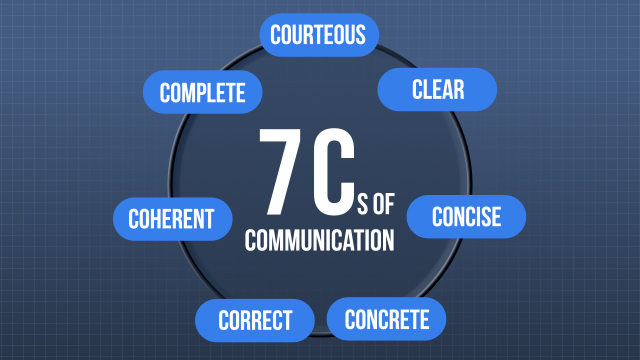
In today’s fast-paced workplace, your ability to communicate effectively could be the difference between team success and costly misunderstandings. This comprehensive course equips supervisors with essential communication tools to bridge gaps between management and staff, focusing on the renowned 7 Cs of effective communication: Clear, Concise, Concrete, Correct, Coherent, Complete, and Courteous. You will learn to select appropriate communication channels for various situations, interpret and utilize nonverbal cues, develop active listening skills, and deliver difficult messages with professionalism and empathy.




Demos + Pricing
Learn more about our courses, get pricing, and see our platform.
Course Details
Learning Objectives
By the end of this course, you will be able to:
- Describe the elements required for effective communication
- List and describe the 7 Cs of effective communication
- Describe different communication methods and how to choose the best one
- Identify and describe common forms of nonverbal communication
- Describe how to listen effectively
- List general communication guidelines and skills for supervisors
Specs
Frequently Asked Questions
What is the most effective form of communication?
What are the 7 Cs of communication?
What does it mean for communication to be concrete?
How do I control non-verbal communication?
How should bad news be communicated?
Sample Video Transcript
Communication is the transfer of information between a sender and a receiver. There are many different ways this can be accomplished, but the three main forms of communication are:
- Verbal – speaking face-to-face or over the phone
- Nonverbal – communication without words, for example, facial expressions, eye movement, body language, or hand gestures
- Written – reports, emails, posters, or webpages
For communication to be effective, the sender and receiver need to reach a common understanding. The sender must choose the appropriate communication method and deliver a message that’s easy for the receiver to interpret. The receiver must listen and provide feedback to verify their understanding.


