











Tanker Rollover
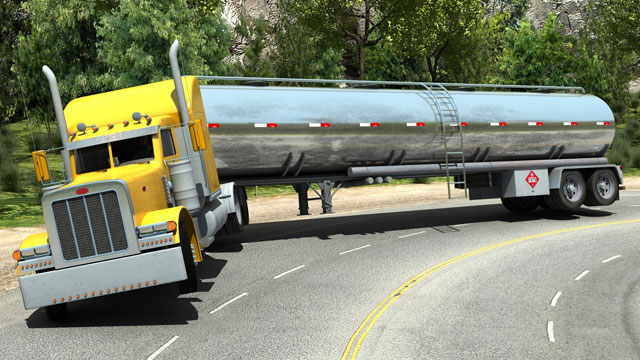
Approximately 1300 tanker truck rollovers occur every year. These rollovers are the reason behind one in four accident-related truck driver deaths. This course emphasizes the importance of drivers paying close attention to the road and its conditions, as well as how their behaviors and decisions can factor in a rollover.


Demos + Pricing
Learn more about our courses, get pricing, and see our platform.
Course Details
Learning Objectives
• Key statistics on tanker rollovers
• How tanker rollovers occur
• Common causes of tanker rollovers
• Ways to prevent tanker rollovers
Specs
Frequently Asked Questions
What happens during a rollover?
Why are trucks more likely to rollover than cars?
What are the most common risk factors for a tanker truck rollover?
What contributes to 75% of all tanker rollovers, and how do you prevent it?
Why does the impact of having a high center of gravity attribute to tanker rollovers?
Sample Video Transcript
All vehicles have a point at which lateral forces will cause them to rollover. The lowest value of lateral acceleration that will cause a vehicle to rollover is called its rollover threshold, which is measured in gravitational units or “g”. Vehicles with a lower rollover threshold take less force to flip over, which means they are less stable. For example, standard cars typically roll at 1.2 to 1.3g, while pick-up trucks or jeeps roll at about 0.8g. A fully loaded tanker truck however, requires only 0.4g to roll. Unlike a car that will more likely skid than roll, trucks are more likely to roll. This is due to the higher center of gravity of the truck and trailer. Typically, during a rollover, the inside rear trailer tandem wheels lift first. The suspension and body of the trailer can absorb some twisting, but at a certain point the tanker begins to flip. The driver’s first indication of rolling may be the image of the trailer lifting up in the side view mirror, giving little to no time to react.
Additional Resources
- Federal Motor Carrier Safety Administration (US Dept. of Transportation) – http://www.fmcsa.dot.gov/


